Issue 1: Gathering grounds
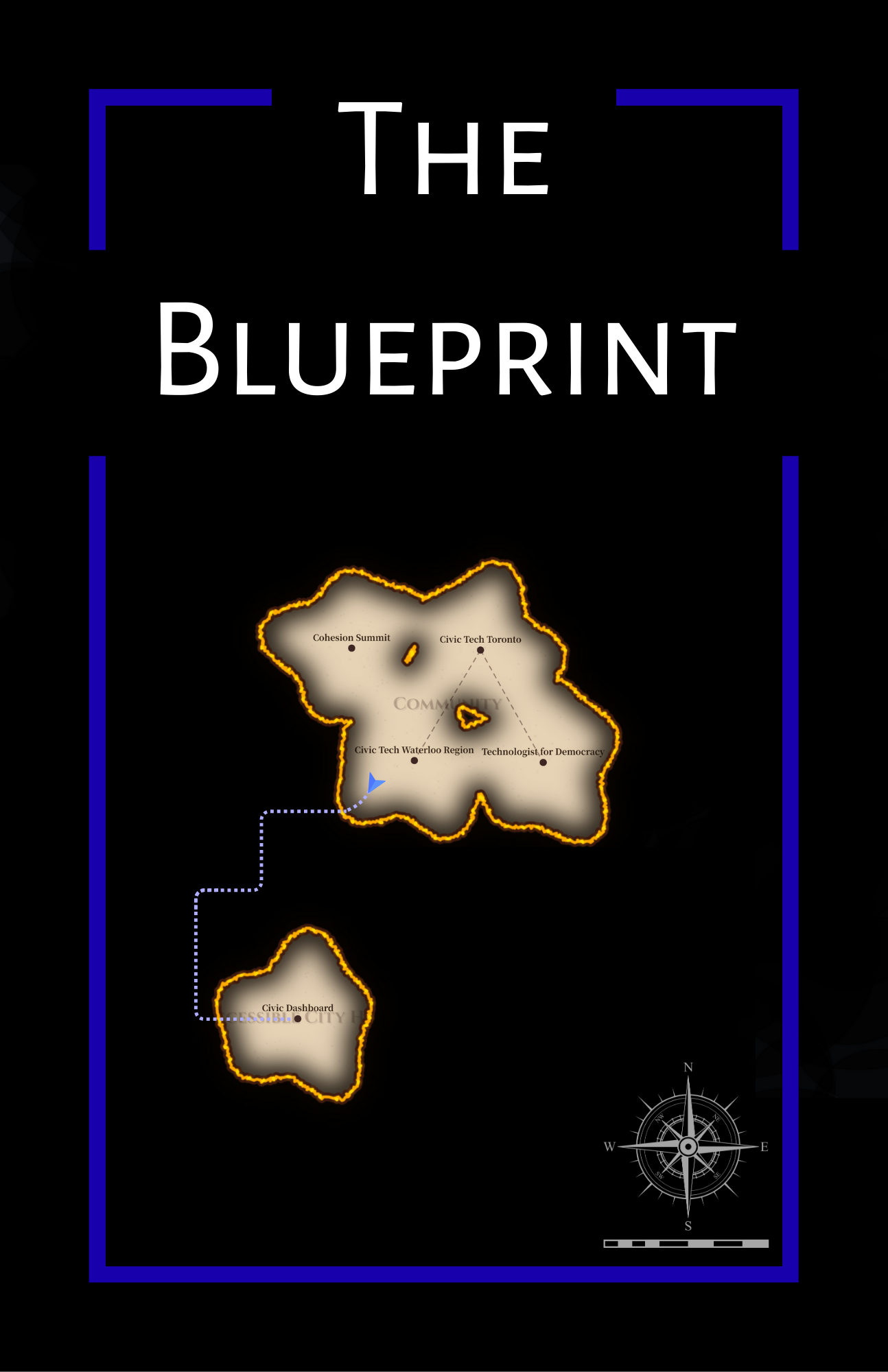
November 2025, this issue we focused in spaces for community, explore how people build community and enable projects.
This month we had 4 cases, 1 story and 1 analysis added to the knowledge base.
7 Days free trial access to all content: https://the-blueprint.ghost.io/charge7th
Field Trip
Civic Tech Waterloo Region
Messy is normal for community.
The journey of Civic Tech Waterloo Region grow, struggle. This community runs quarterly pitch event for projects to find contributors and for members to learn opportunity of working on projects.
Civic Tech Toronto
Some principles community builders can follow.
Civic Tech Toronto has run weekly hacknight events since 2015, it is also the only civic tech local meetup in Canada to survive the pandemic period of 2020-2023. This case study reveals their design choices around scope, resilience, and volunteer management.
Technologists for Democracy
Research to find the right gap is helpful.
This is the journey of how ordinary tech workers built a group to make sure technology helps everyone.
Cohesion Summit
Struggle and pivot can be common.
Cohesion Summit was trying to bring people together to work on community projects. It is a learning story.
Community Story
Story of Civic Dashboard
Making news in city council more accessible.
Note on Story
The Community Story will be discontinued within 2026 because we are pivoting to be a knowledge base of case studies and syntheses, instead of a consumer magazine. Ultimately we may turn ourselves into association to better support our long term vision of workshops and conferences for the best practices of community led projects grounded by real world evidences.
Comparative Analysis
Getting Started Right
Standing on the shoulders of giants—such as discontinued Civic Tech initiatives.
On the internet
Community Rule
A governance toolkit for great communities.
Civic Tech Toronto principles and governance
Presentation highlights Civic Tech Toronto's pretty neat structure, and share details about its steering committee.
The First Summit
The journey of Cohesion Summit written by its organizer(s).
Failed yet successful: Learning from discontinued civic tech initiatives
Research learning from discontinued civic tech initiatives.
Printed
If you are making order from Canada, please ask if your friends or people near by will buy together. Because the shipping really cost a lot, group buy helps lower the shipping to a fair price for everyone.

Printed version of our first issue covering some community spaces that emerge projects. We may not issue monthly as a magazine and pivot to database.

Get discount on purchasing the printed: BF2025
The first and may be the last printed magazine for us. Pivoting.
Editor’s note
The magazine was designed to incentivize people accepting interviews. In practice it seems getting information is easier than we expected and the magazine model became a barrier for scaling and contribution, also put us in a difficult position in the ecosystem. Therefore repositioning ourselves to database that supports other communities and researches will be more effective for reaching the vision of workshops and PMBOK(R)-like frameworks. And also concentrate our efforts in the content instead of typesetting under current resource constraint.
In the coming year, we may further develop ourselves to be association where members work together. Members can see a list of all practitioners in the association—real people doing this work. Members come to workshops four times a year and one big meeting each year. In these meetings, we look at projects in our database together with local knowledge brought by individuals to the meetings and find patterns. We make simple rules from what we learn.
With the association and its annual fee, if the database does not have information any member need, there will be mechanism to ask us to find it. We will search and add it.
To keep the membership, members must contribute each year. Contribution can be writing a case study with others. Reading papers and suggesting new patterns or principles also count as contribution. Help in our monthly operation by reading other submitted works to control quality of the database and give feedback for writers also secure the membership. This way, the database stays new and useful. Members add to it. Members use it. The database grows because people who use it help make it better.
Access to our content with free trial


Start a free trial access to the knowledge base now and cancel at anytime.